Design competition for the preparation of the Construction, Redevelopment, and Expansion Project for the Restelo Secondary School Parish of Belém
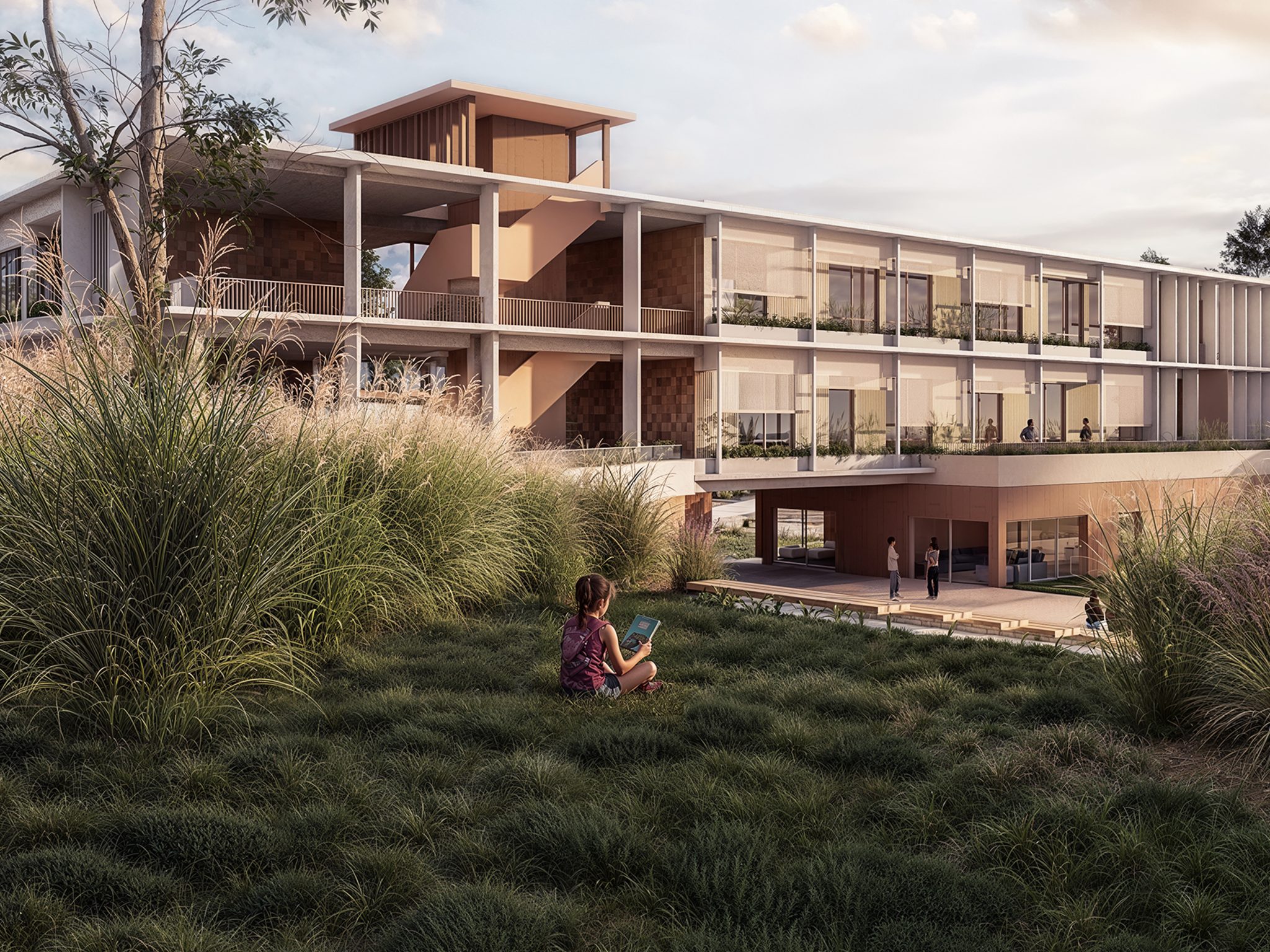
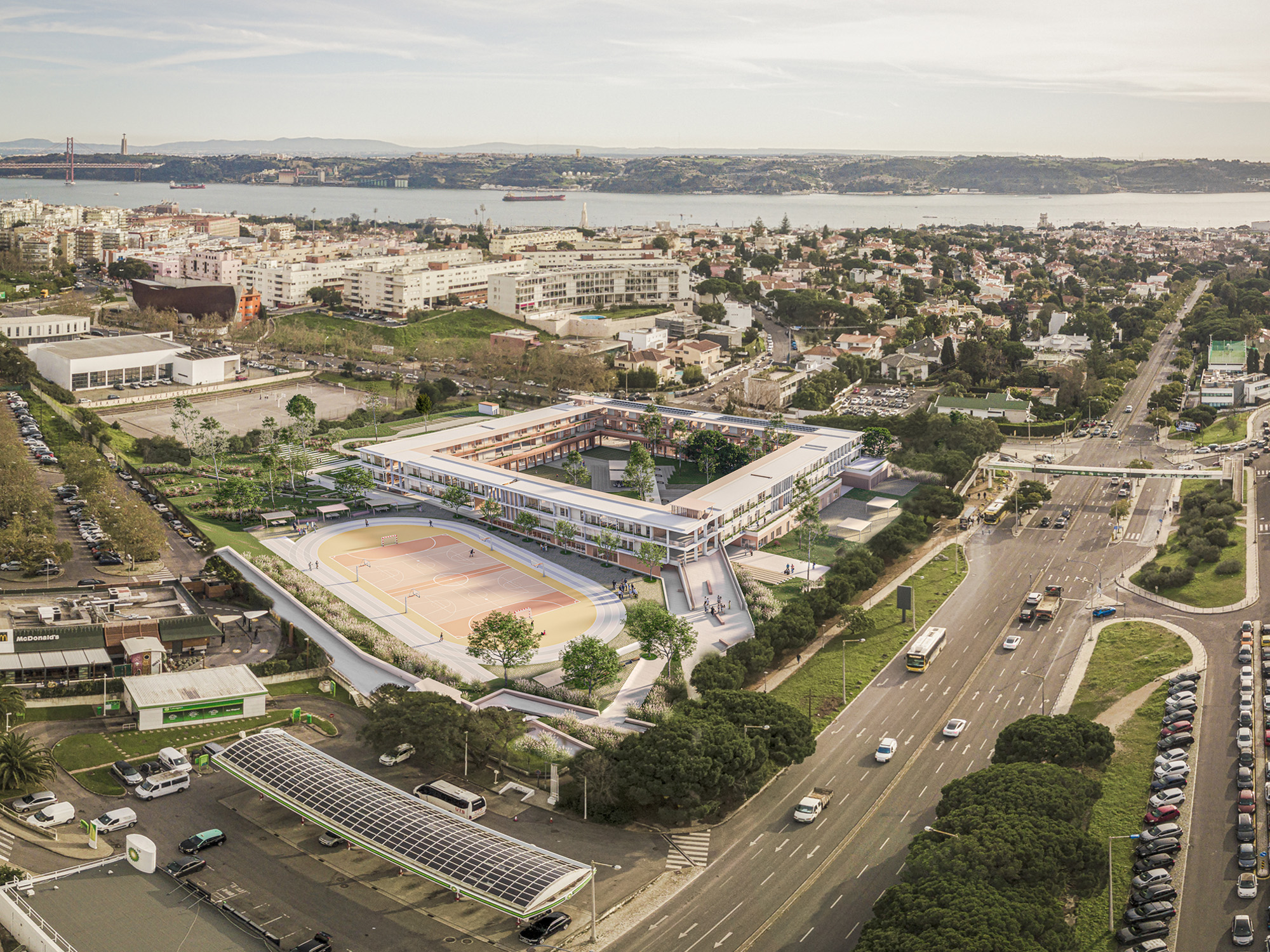
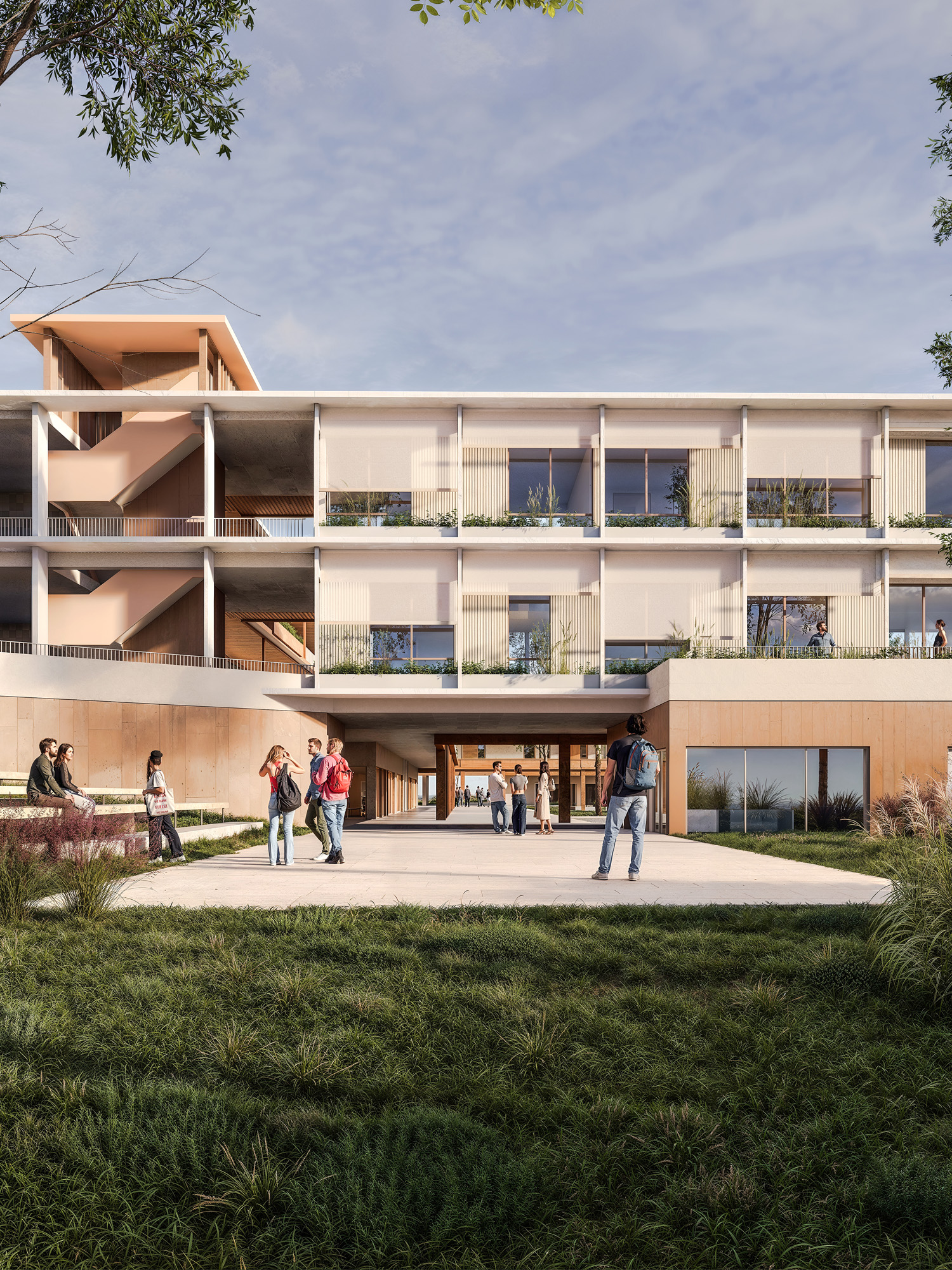
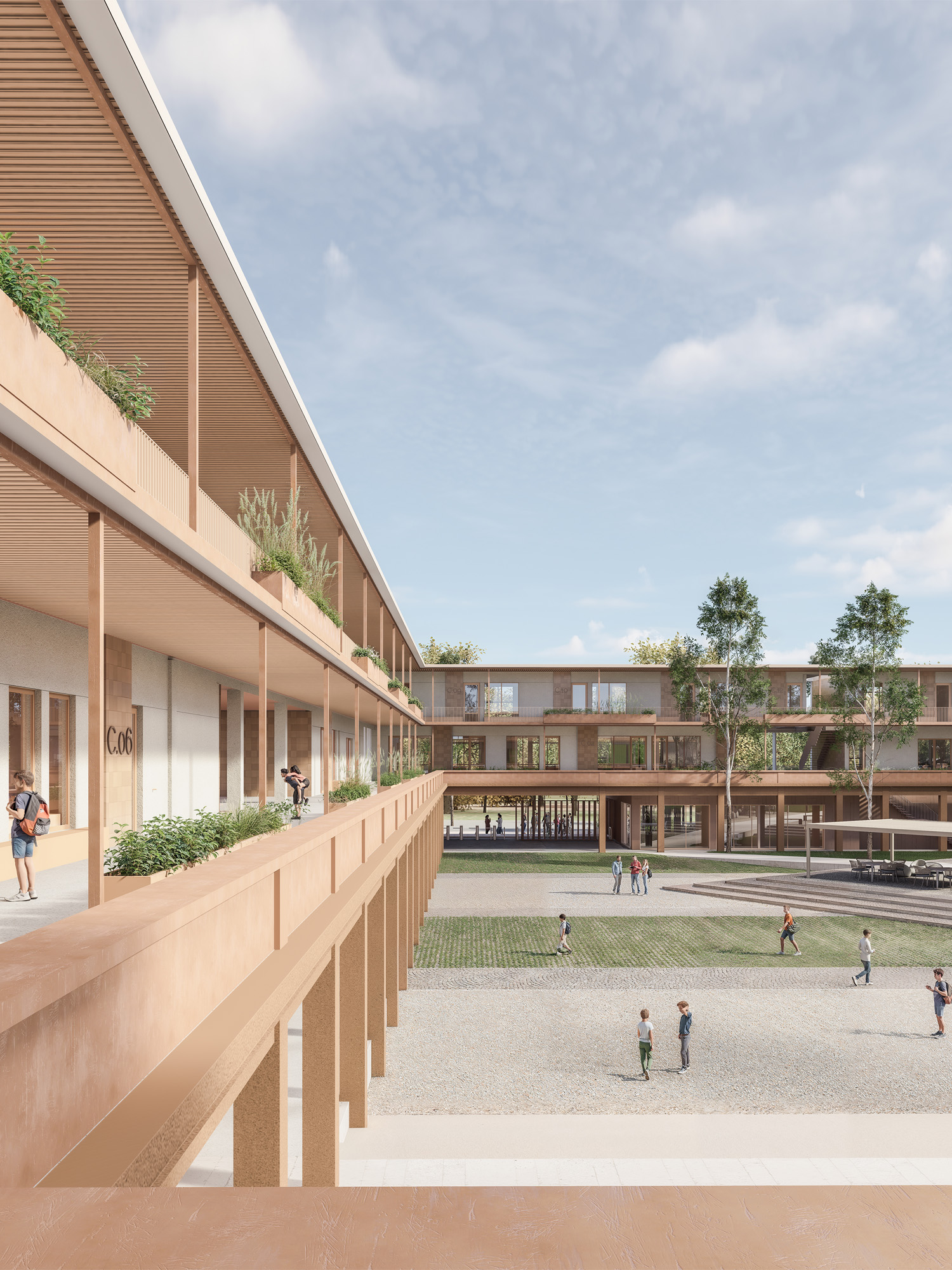
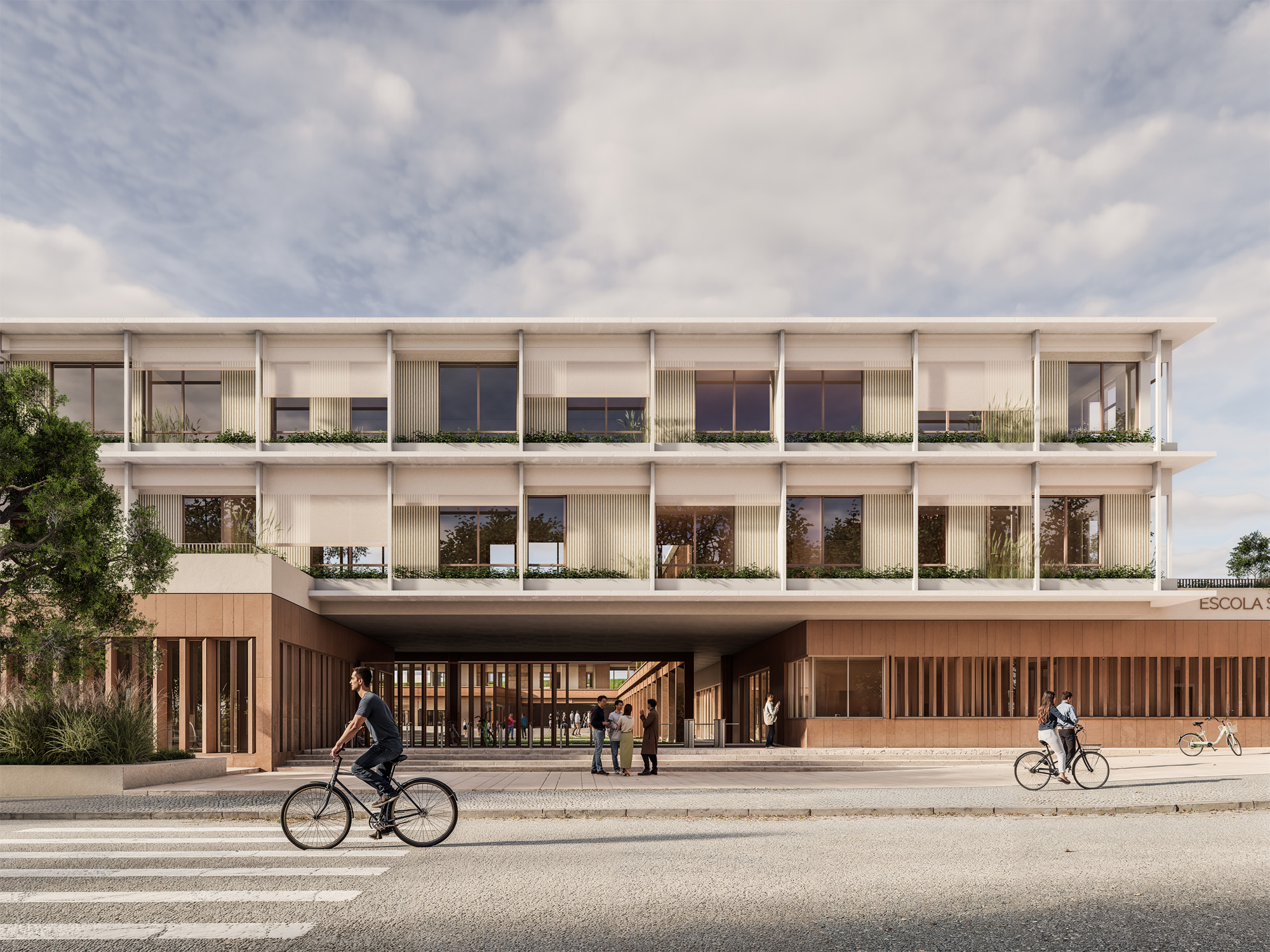
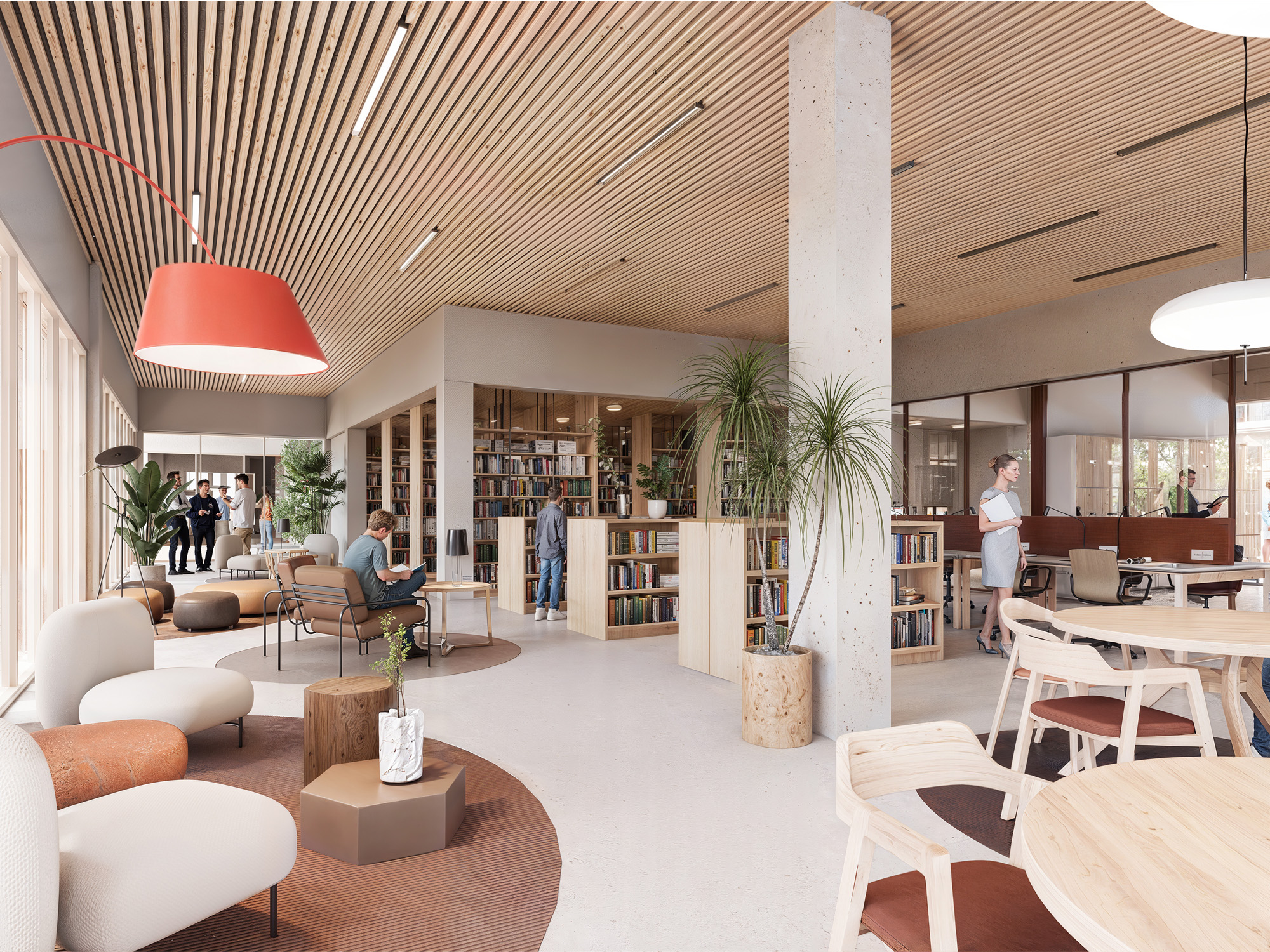
Our proposal for the redevelopment and expansion of the Restelo Secondary School in Portugal revolves around the concept of "O Parque do Conhecimento" (The Park of Knowledge). The aim of the project is to move beyond the traditional concept of the school as a closed and separate building, creating instead a permeable environment with a continuous relationship between indoor and outdoor spaces. The project involves the demolition of the existing buildings and the construction of a new school complex, designed to be more efficient, sustainable and perfectly aligned with contemporary educational and energy standards. The new architecture is mainly horizontal, with the Central Patio at its heart, a multifunctional hub on two levels: the ground floor houses the library, canteen, bar and auditorium, permeable spaces that encourage interaction and sharing, while the upper floors are dedicated to learning, illuminated by natural light and overlooking green spaces. A main pedestrian axis seamlessly connects the different areas, integrating educational environments, green spaces and sports areas into a continuous path of discovery and growth. The large green spaces, which extend in continuity with Monsanto Park, play a central role in improving environmental comfort and offering an oasis of tranquillity that protects the school from the surrounding urban context. Sustainability is an essential pillar of the project, designed as an NZEB (Nearly Zero Energy Building) thanks to the adoption of passive strategies, photovoltaic systems for self-consumption and rainwater recovery systems. The mixed steel structure ensures flexibility, rapid construction and reduced environmental impact. The Parco della Conoscenza thus represents a new idea of school: an open, dynamic place integrated with the community and nature, where learning is not confined within four walls but becomes a continuous and shared experience. Here, the school is not just a building but a living ecosystem that inspires, welcomes and accompanies each student on their journey of growth.
Credits
- Location: Restelo (Lisbona)
- Import: € 21.000.000,00
- Year: 2025
- Surface: 8.445 mq
- Images: ©Settanta7
-
Workgroup/RTP:
Settanta7 S.r.l, Profico S.A., Nichos Urbanos Engenharia, ARCHIVITA – Arquitectura Paisagista, Lda.
-
Collaborators and Consultants:
Tender | Competition: arch. Carla Rubattu, arch. André Machado, arch. Gaia Ricciardelli